
Ivrea Piedmont
Best things to see and do in the capital of Canavese
Looking for the best things to do and see in Ivrea Piedmont? Then you’ve come to the right place!
From the beautiful old town to the industrial city and the surrounding lakes, Ivrea is definitely worth a visit, and not just for the famous Orange Carnival.
I have been to Ivrea several times. There is always something new to discover in this lively little town. Read on to find all you need to know about Ivreas things to do and see.
Ivrea Overview
The interesting town of Ivrea is located in the north of the Piedmont region. It lies about 55 km north of the regional capital Turin and 75 km from Aosta in the nearby autonomous Aosta Valley.
Ivrea is situated on the Dora Baltea River, a tributary of the Po River. It is in a region that was formed by a large Pleistocene glacier. This glacier created a series of moraine reliefs, including the Serra Morenica, the longest, most massive and straightest hill in the world.
With just under 24,000 inhabitants, Ivrea is considered the capital of the Canavese. A region known for the DOC wine of the same name.
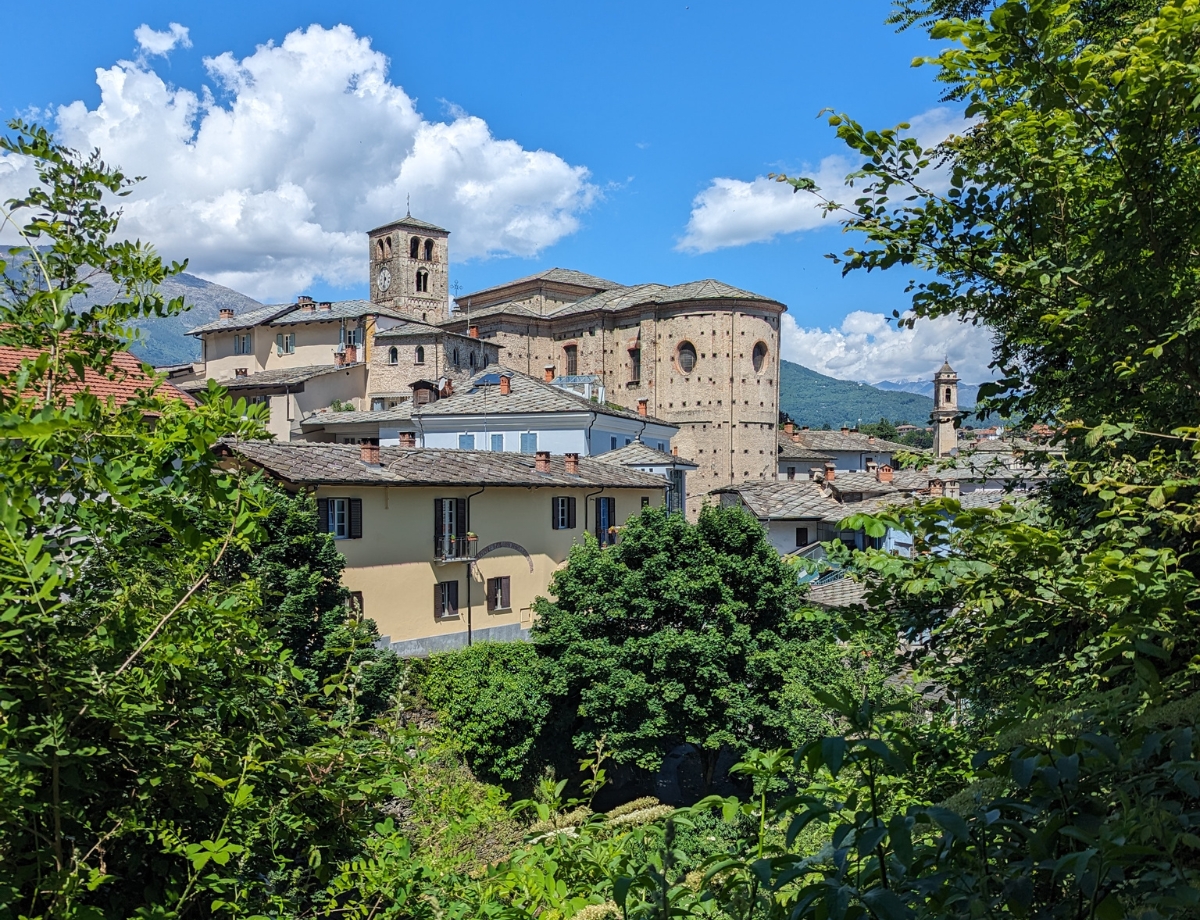
The historic center is on a hill north of the Dora Baltea. South of the river lies the industrial city of Ivrea, one of the most important industrial centers in Piedmont. It has developed since the 20th century, thanks to the Olivetti company.
Save Time and Money with my Ready-to-use Piedmont Itineraries
⇨ My 2-Day Piedmont Itineraries (crafted with love and expertise)
Things to see in Ivrea old town
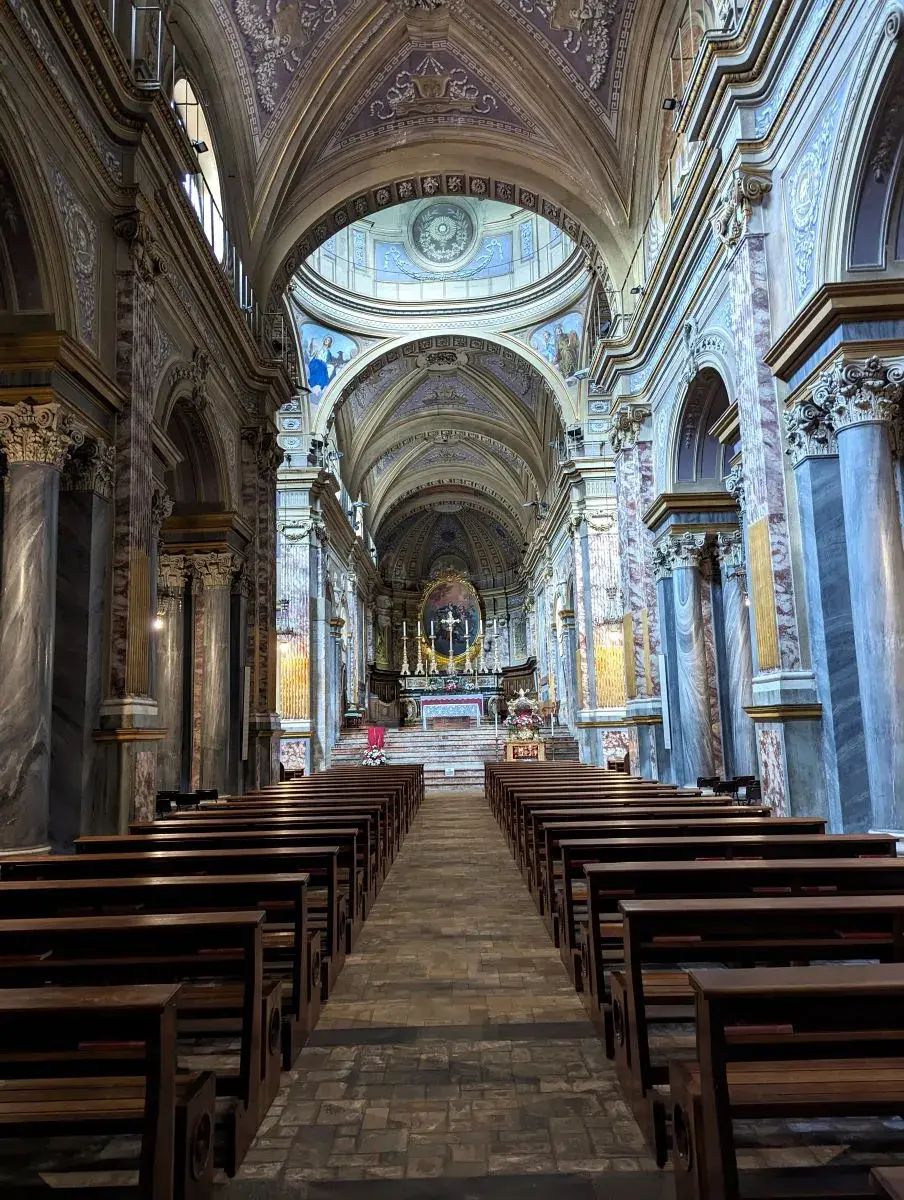
Ivrea Cathedral / Cattedrale di Santa Maria Assunta
The old town hill, where the cathedral of Ivrea has stood for over 1000 years, is said to have been the site of an acropolis in Roman times.
The sarcophagus of the 1st century quaestor Caius Atecio Valerius can be admired in the cathedral crypt, which is well worth a visit.
The cathedral has a covered connection with the Palazzo del Vescovado, the former bishop’s palace, whose foundations are also Roman.


Other churches of Ivrea worth seeing
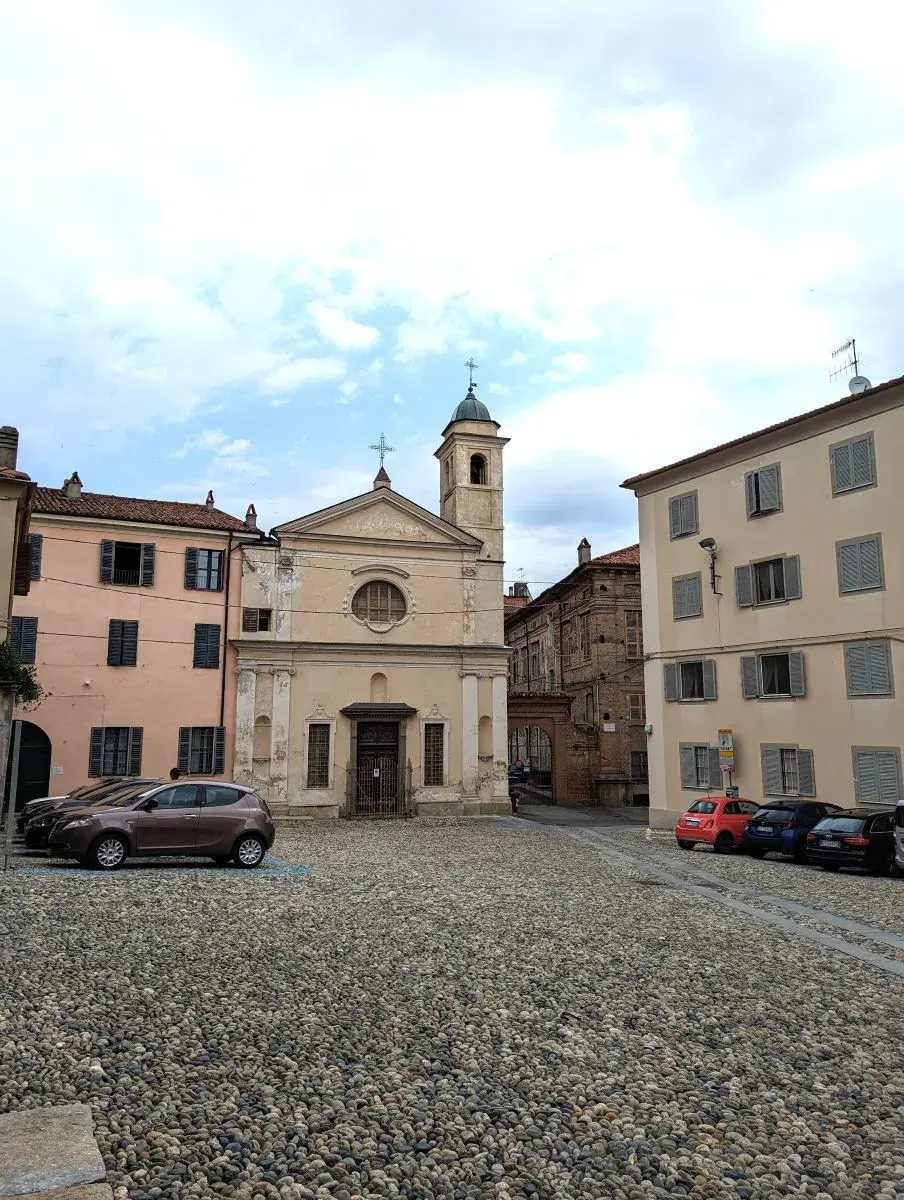
The church of San Nicola da Tolentino, also in Piazza del Duomo, was built in 1605.
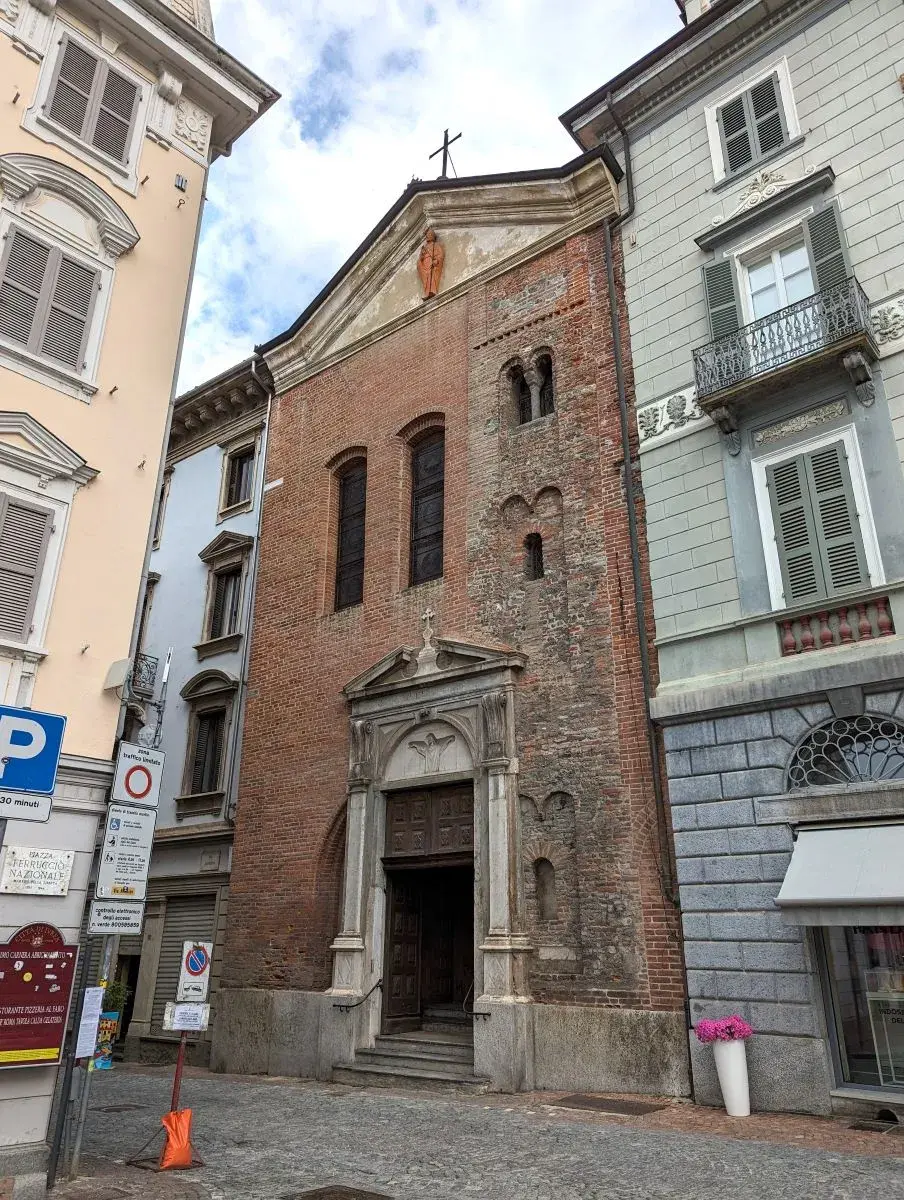
In the main square of Ivrea, Piazza di Città, stands a successor of the first church of Sant’Ulderico, built in 993 and made of beautiful red brick.
The Sanctuary of Monte Stella stands on a hill and can be reached from the piazza by a 19th century Via Crucis. The sanctuary was built in 1627 as a sign of devotion to the “Black Madonna” of Oropa.
Ivrea Castle
Above the old town, almost next to the cathedral, stands the city’s landmark: the imposing castle of Ivrea, known as the castle of the “red towers”.
It was commissioned by Amedeo VI of Savoy in 1358, built entirely of brick and has a square floor plan with a large inner courtyard, reinforced by slender cylindrical towers.
The largest tower was damaged by lightning in 1676 and was never rebuilt. The castle originally housed political and religious institutions. Over time, it was used as a prison and stripped of its valuable interior furnishings.
Unfortunately, it cannot be visited as it is expected to be renovated by 2025.

The streets of the old town of Ivrea
The main square of the beautiful old town, Piazza di Città, divides the main pedestrian street, Via Palestro-Via Arduino, into two parts.
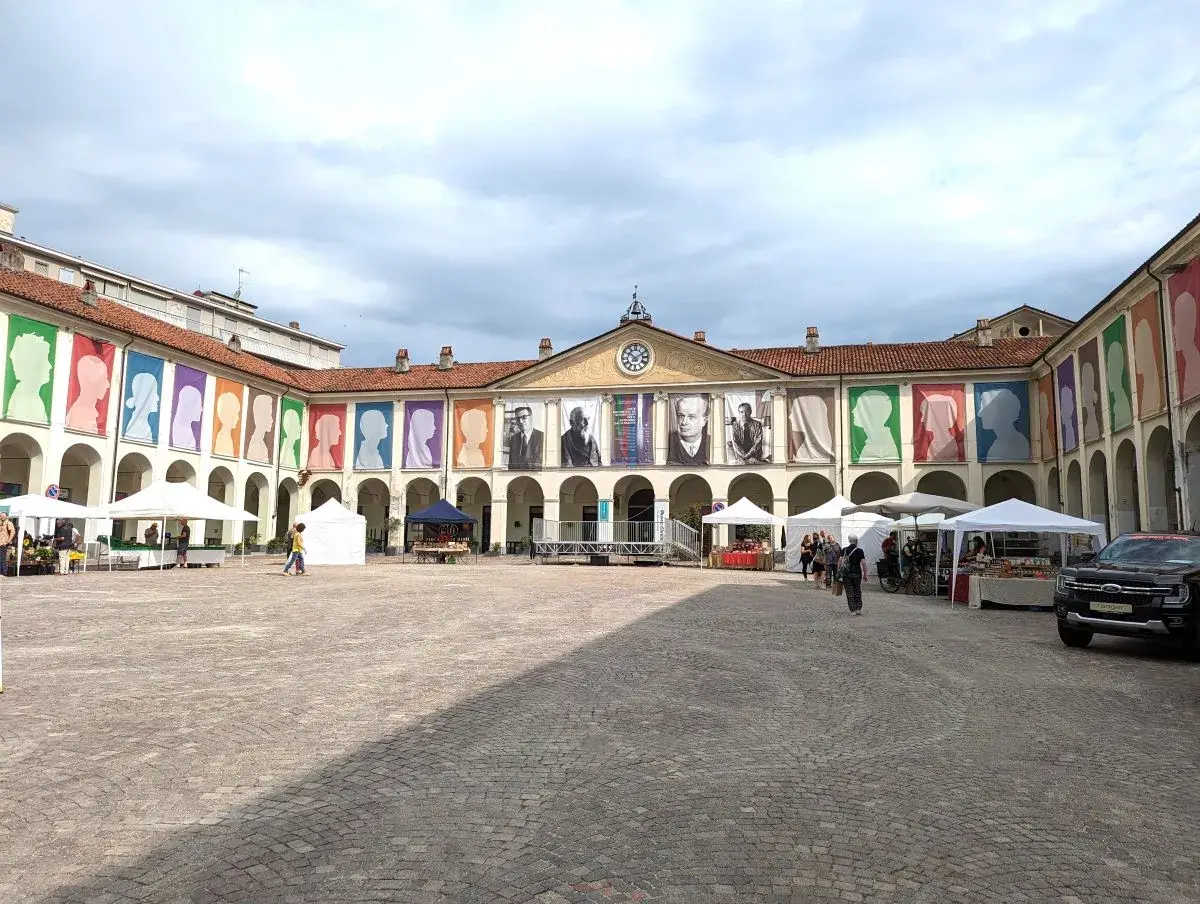
The Palazzo Civico, the town hall with its bell tower, stands on this beautiful little square.
In Via Quattro Martiri 20, the former ghetto of Ivrea, there is the synagogue built in 1875 with original 19th century furniture.
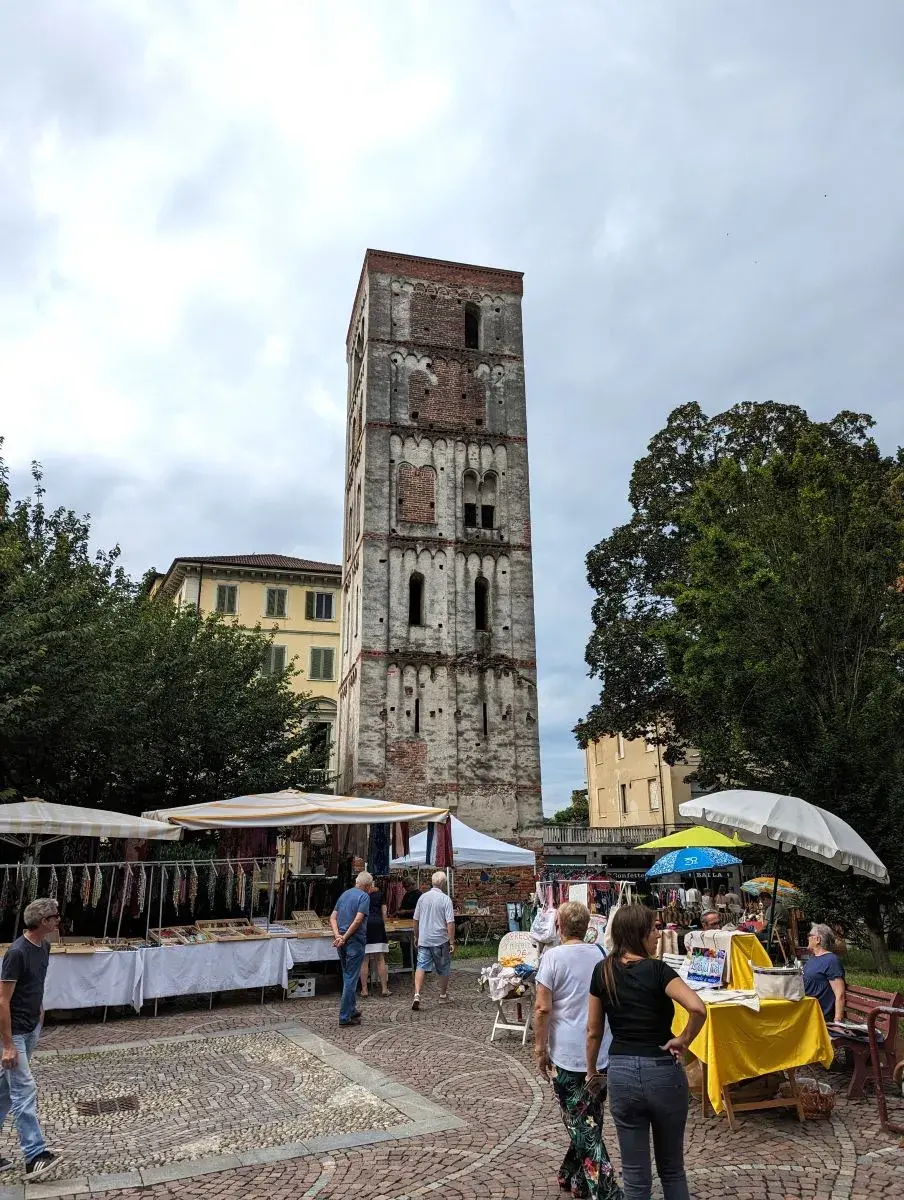
The Tower of Santo Stefano, the bell tower of the 11th century Benedictine abbey of the same name, is probably of Roman origin.
The abbey was completely destroyed in the Middle Ages, while the tower stands today in the public gardens of Ivrea.

Ponte Vecchio and Dora Baltea
The beautiful Roman bridge, which was built around the third century, spans the river Dora Baltea. It is still fully functional and is used by cars.
It leads to the old Borghetto district, which is dominated by Mount Ferroglietto, where a citadel once stood. Today it is home to Villa Chiampo, the former residence of Giacomo Chiampo, mayor of Ivrea from 1888 to 1895.
Just a few meters to the east, the wider Ponte Adriano Olivetti bridge and a railroad bridge directly behind it cross the river.
My tip: The café on the bridge or the nearby Giardino Donne Della Resistenza park are great places to sit and watch the canoeists conquer the water course.

Industrial city of Ivrea
The so-called industrial city of Ivrea was built between 1930 and 1960 by Adriano Olivetti and is totally different to the old town. Its architectural heritage covers 70% of the urban area.
The example of residential, industrial and social buildings was inscribed on the UNESCO World Heritage List in 2018.
The idea behind the management of the factory founded by Camillo Olivett differed from the rest of the Italian industrial landscape, as the focus was not exclusively on profit, but also on the well-being of the employees.
For example, there were “flexible working hours”, scholarships and even toys and gifts for workers’ families at Christmas.
The industrial estate had medical care, kindergartens, summer camps, a canteen and a library, and everything was available free of charge or at significantly reduced prices for employees and their families.
Recognized by UNESCO in 2018, the World Heritage Site comprises a complex of 27 buildings, a large factory, administrative and residential buildings and social facilities.
The site can be visited today. Tickets and further information are available at the UNESCO Visitor Centre, the Olivetti Visitor Center (⇨ Location)
Ivrea Lakes
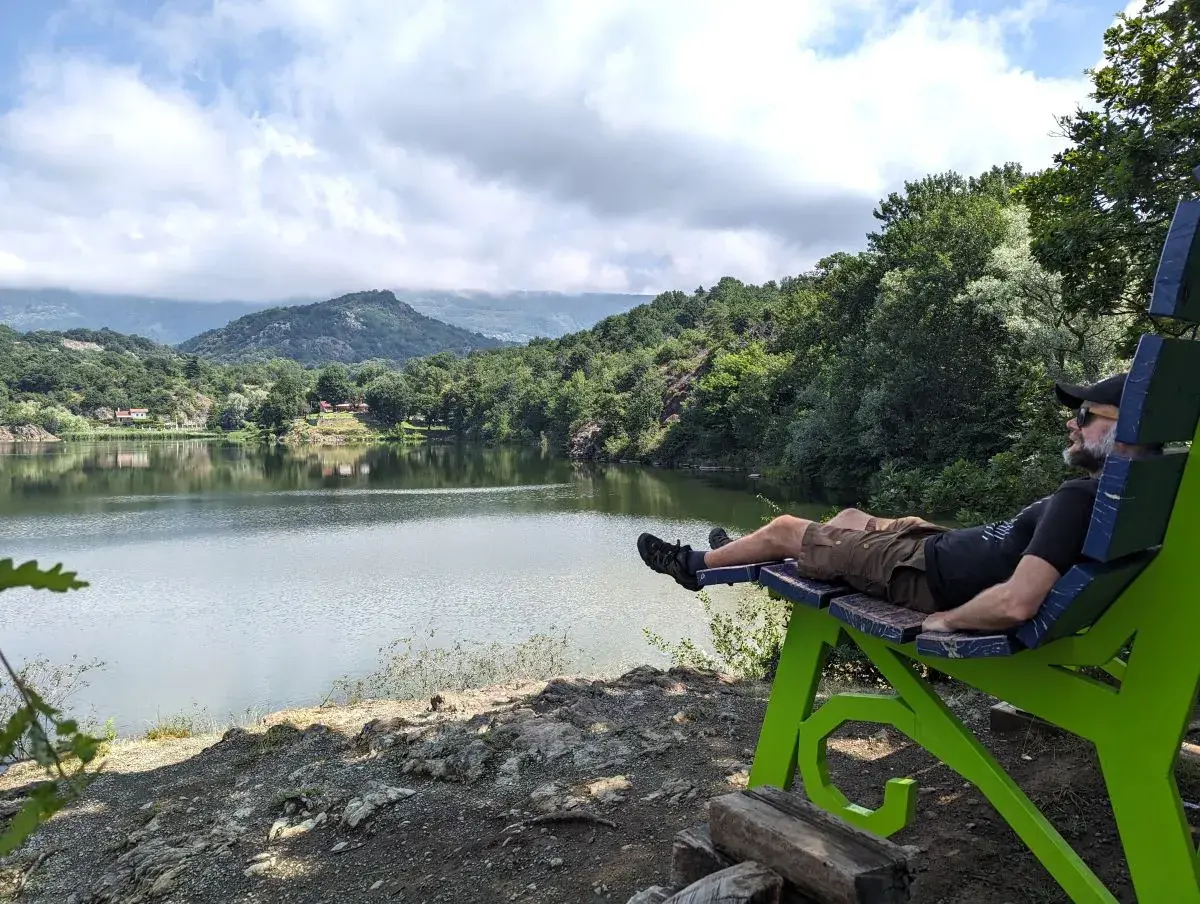
After the retreat of the last ice age, numerous moraine lakes were formed to the north of present-day Ivrea. The areas around Lago Sirio, Lago San Michele, Lago Pistono, Lago Nero and Lago Campagna are perfect for a leisurely walk through the beautiful nature.
Do not miss the giant bench Panchina Gigante # 145 – Montalto Dora (⇨ location) is located on the shores of the picturesque Lago Pistono.
Via Francigena
The Via Francigena is a historic pilgrimage route that stretches for around 1600 kilometers and leads from Canterbury in England to Rome.
The popular pilgrimage route has a long history and was first documented in the 9th century when Archbishop Sigeric of Canterbury walked it in 79 days.
From Switzerland, the international hiking trail leads to the Aosta Valley and then runs around 650 km through Piedmont.
The city of Ivrea, a stage destination along the route, offers a Via Francigena information center and a pilgrims’ hostel (it. Ostelli) ⇨ Location.

Ivrea Carnival / the Battle of the Oranges
Ivrea is famous for its unique, historic carnival, the Battaglia delle Arance (Battle of the Oranges).
This spectacular custom has its roots in 1808, when the Napoleonic rulers decided to merge the various carnival festivals into one big event.
The highlight of the multi-day carnival in Ivrea is the traditional Battle of the Oranges, in which thousands of people are divided into different groups and throw oranges at each other. The oranges symbolically represent the tyrannical rule against which the people are rebelling.
The festivities, Italy’s oldest carnival, last for several days and include colorful parades in historical costumes, music, dancing and traditional culinary specialties.
That special Carnival has now gained international fame, is one of the cultural highlights of the region and attracts thousands of visitors from all over the world every year who want to experience the unique spectacle up close. ⇨ Click here for the official festival website.
San Savino
Another important festival takes place around July 7. This is the day of the city’s patron saint, San Savino. There is a horse fair, a parade of historic carriages and riding exhibitions, markets and information stands in the old town as well as a large fireworks display.
Interesting: The patron saint San Savino was the bishop of Spoleto at the end of the 3rd century and died a martyr’s death there during the persecution of Christians.
It was not until 956, almost 600 years later, when Ivrea needed a patron saint to free the city from the plague. San Savino’s body was “transferred” and the plague supposedly stopped immediately when the martyr’s mortal remains arrived in Ivrea.


How to get to Ivrea
Getting to Ivrea by car
From Turin, the 55 km to Ivrea takes 50 minutes on the toll highway or an hour on the country road. The small town to the north of the capital is perfect for a day trip.
Parking in Ivrea
On the south bank of the Dora Baltea, north of the train station, there is a large, free parking lot (⇨ location), which is a great starting point for a city tour.
From here, you can reach the historic center of the old town in less than 10 minutes on foot via the Passerella Natale Cappellaro pedestrian bridge or the Adriano Olivetti bridge.
Arrival by train
There is a direct train from Turin to Ivrea every two hours.
Travel time: 1 hour / Price: € 6.70 each way